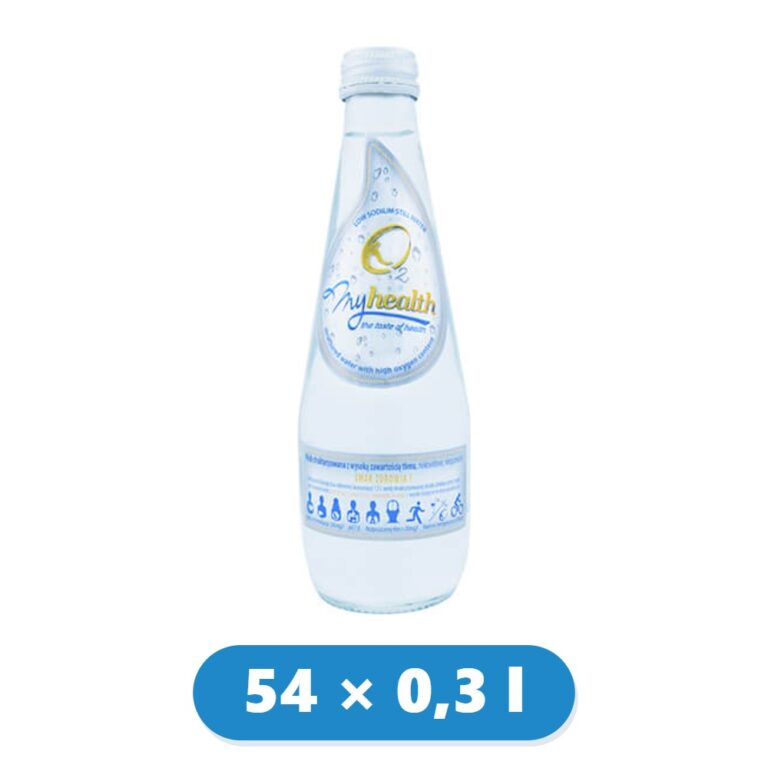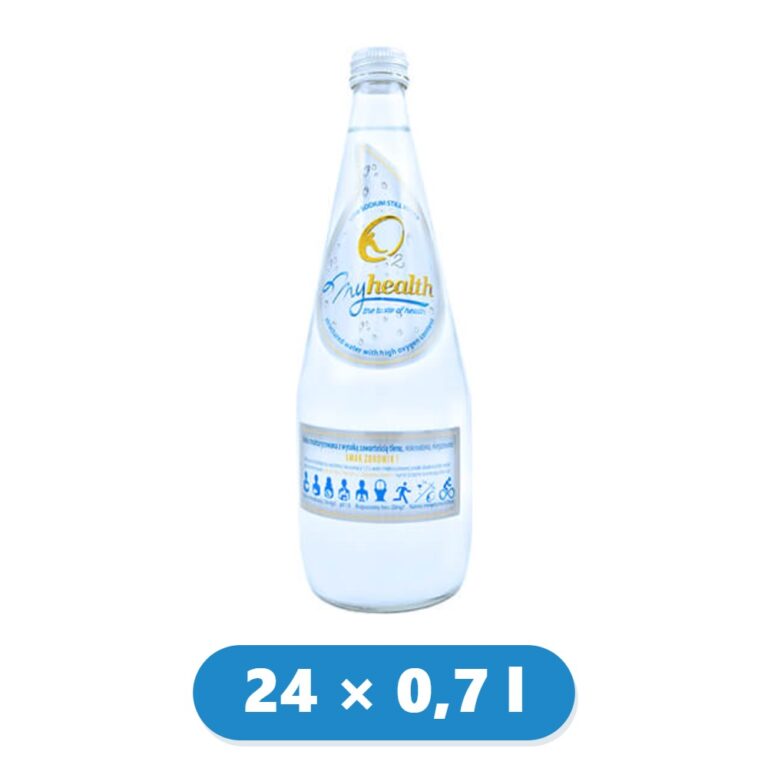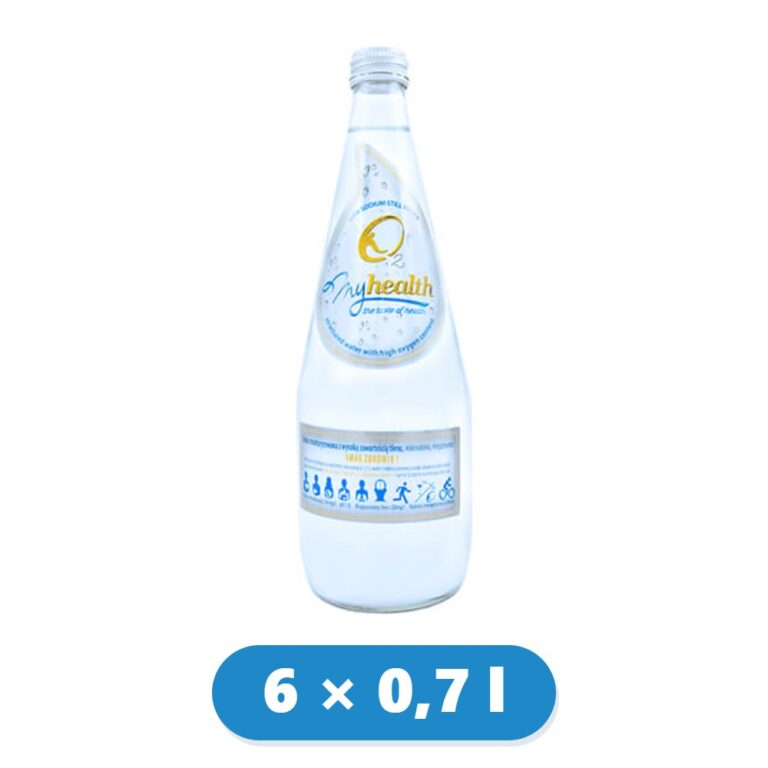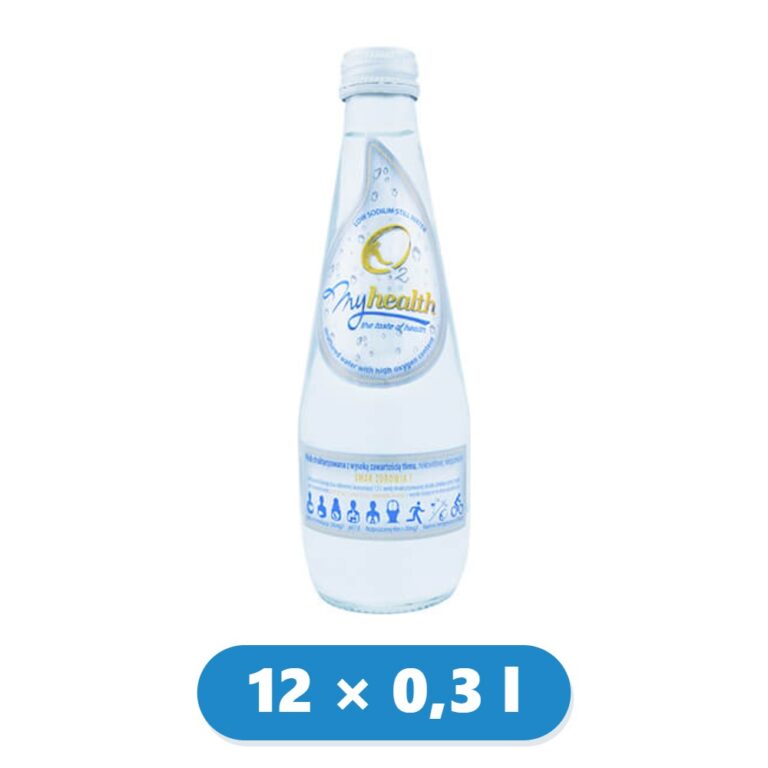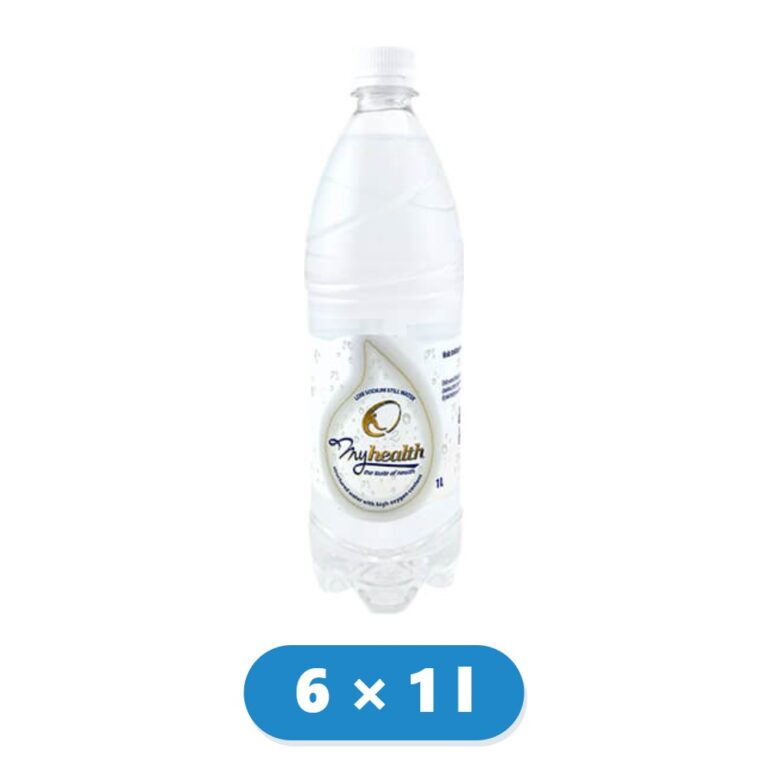
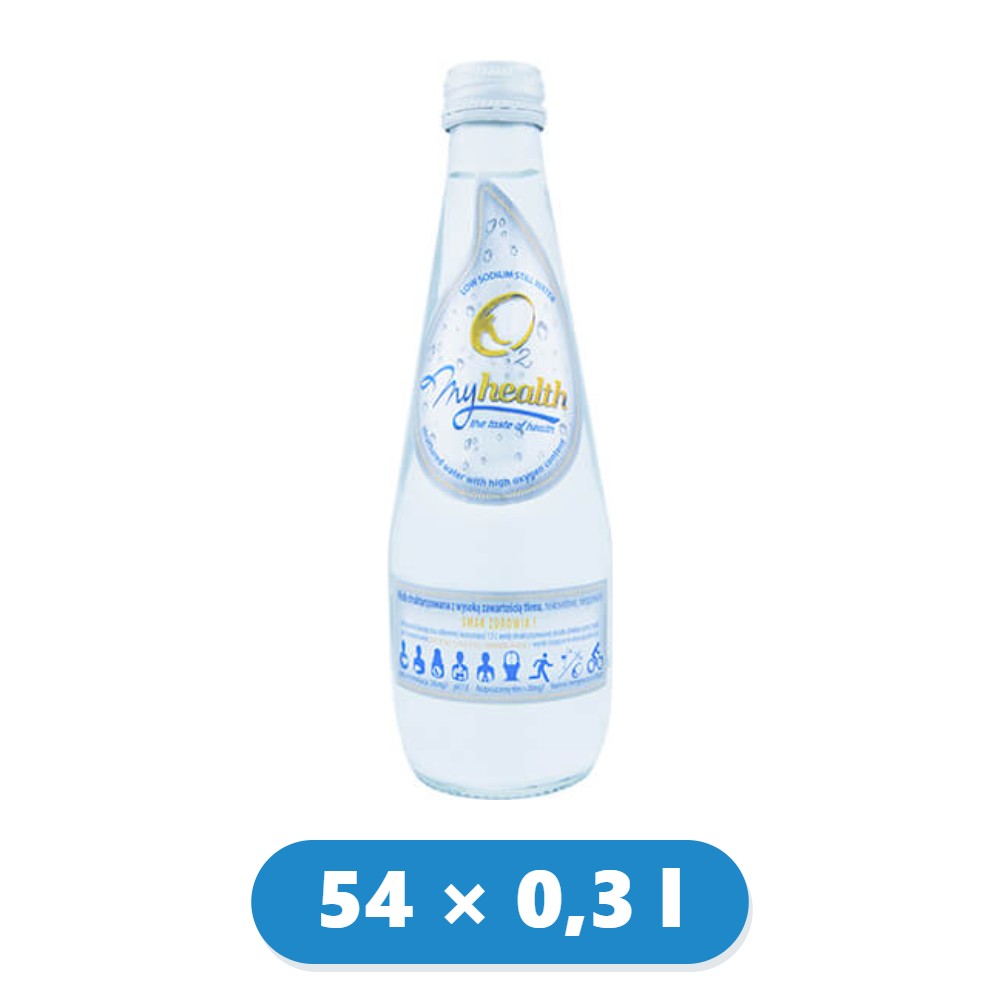
Low mineral water – what does 336 mg/l on the label mean?
Every bottled water label states its composition. One of the most important values is total mineralisation – the sum of all minerals dissolved in the water, given in milligrams per litre.
Mineralisation thresholds
Labelling rules for waters classify them by mineral content:
| Description | Mineralisation |
|---|---|
| very low mineral content | up to 50 mg/l |
| low mineral content | up to 500 mg/l |
| medium mineral content | 500–1500 mg/l |
| rich in minerals | above 1500 mg/l |
MyHealth water contains 336 mg/l of minerals, so it belongs to the low mineral waters.
What does it mean in practice?
Low mineral waters have a mild, neutral taste. They are well suited for everyday drinking, for coffee and tea (leaving little limescale in the kettle) and for cooking. Low mineral water does not replace a balanced diet – minerals come mainly from food.
Spring, mineral and table water
- Natural mineral water – comes from an underground deposit, has a stable composition and original purity confirmed by documentation.
- Spring water – also comes from an underground source and is originally pure, but the rules set different requirements for documenting its composition.
- Table water – is made by adding minerals to spring or mineral water.
MyHealth water comes from the same source as Ostaniec water in large bottles. It contains no nitrates or nitrites and is low in sodium.
Frequently asked questions
What is the mineralisation of MyHealth water?
Total mineralisation of MyHealth water is 336 mg/l, which means low mineral water.
Are MyHealth and Ostaniec the same water?
Yes, both come from the same source in the Jura region. MyHealth is additionally aerated with nanobubbles and bottled in glass and PET.