
We have been developing MyHealth water (formerly “Górski Potok plus tlen”) together with the scientific community from the very beginning. This page shows how the work was carried out – who led it, how many people took part, for how long and with what methods.
Timeline
From the history of the brand
Before the MyHealth brand was created, our water was called “Górski Potok plus tlen” (Mountain Stream plus oxygen). The studies described below were carried out, and their results published, under that name.
Sanatorium observations (2011–2012)
Patients of a rehabilitation sanatorium
Consecutive patients referred for spa treatment due to musculoskeletal conditions were invited to take part. Participants were divided into a test group drinking MyHealth water and a control group drinking ordinary water from the same source. The study was carried out under double-blind conditions. Each participant drank 0.5 l of water before each of three meals.
Coal mine programme (2013–2014)
Employees of the Knurów-Szczygłowice mine
Thanks to cooperation with the Board of Kompania Węglowa S.A., MyHealth was the workplace drinking water at the Knurów-Szczygłowice mine. From the employees covered by the programme, a group of men from almost all workplaces – with different exposure to stress, physical effort, dust and high temperature – was selected in two age groups. Tests were repeated after 3 and 12 months and compared with tests from the period when a different brand was the workplace water.
How it was measured
- Medical examinations at the start and end of observation
- Laboratory blood tests
- Ultrasound and ECG
- Anthropometric measurements: body weight, circumferences
- Blood pressure measured every few days
- Well-being questionnaire based on the SF-36 form
- VAS scale – sensations compared with the starting point
- Statistical analysis within and between groups
How much oxygen is in the water
Oxygen dissolved in MyHealth water is its most important feature. We measured how its content changes after the bottle is opened – in two different bottling batches from 2011.
Tip: for the first 2 hours after opening, the oxygen content hardly changes. After that it gradually decreases – so it is best to drink an opened bottle within a few hours and keep it closed.
Publications
The results of this work have been published in professional journals and presented at scientific conferences. Full texts can be found in Publications and literature.
The article describes the first stage of observations at the “Gwarek” Sanatorium and Hospital for Musculoskeletal Rehabilitation in Goczałkowice-Zdrój: 50 patients aged 33–82 drank at least 1.5 l a day of spring water with 14.5–20 mg/l of dissolved oxygen for an average of 24 days. The authors describe the methods, measurements and results, and point to the need for further double-blind studies.
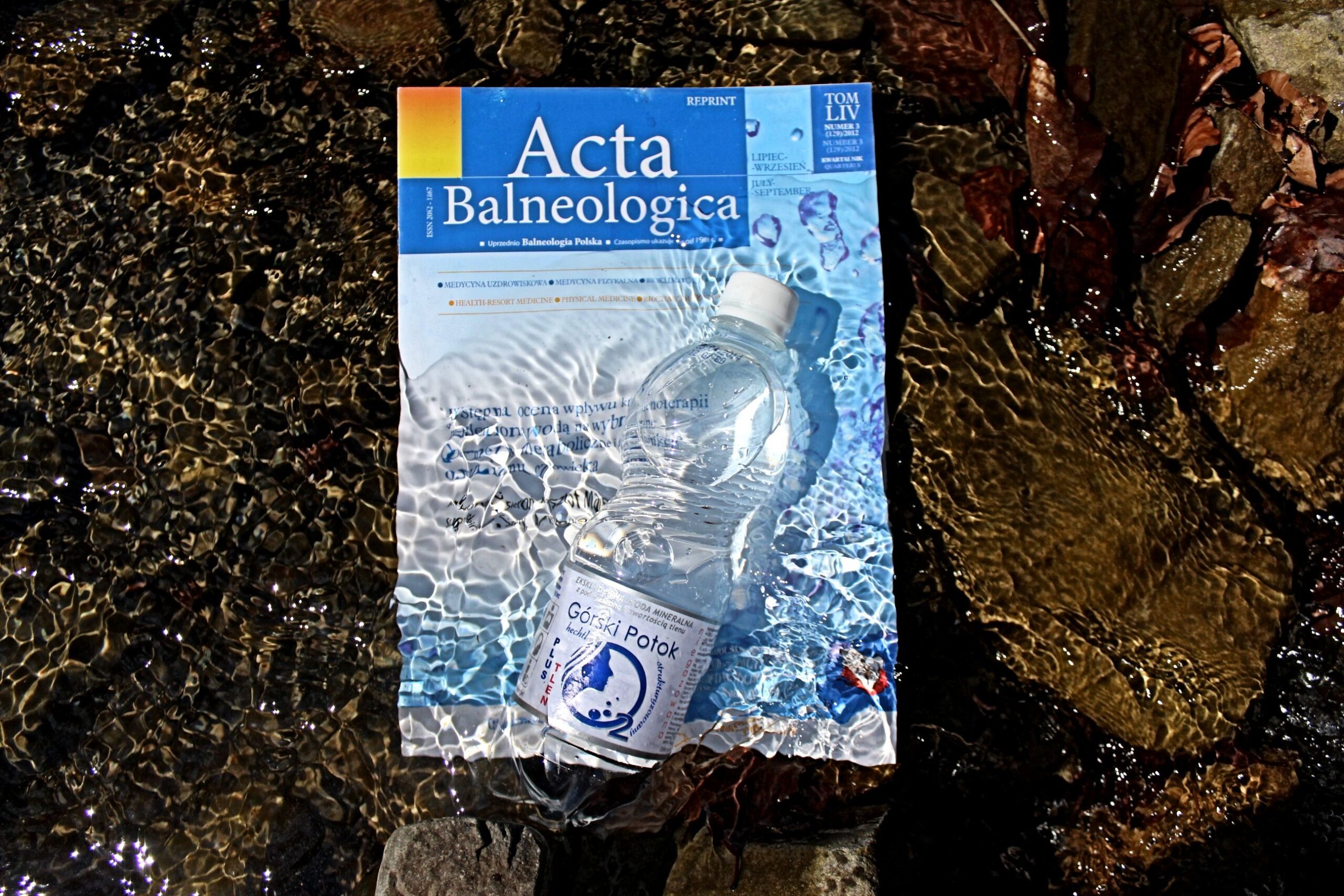
Read the article (PDF) →Publication of the controlled study described above: 92 sanatorium patients aged 19–82, divided into a test group and a control group, double-blind conditions, an average of 24 days of observation. The article presents the full methodology, results and statistical analysis.
Read the article (PDF) →MyHealth is spring water – a food product, not a medicinal product. It is not a substitute for a varied diet, a healthy lifestyle or treatment recommended by a doctor. The observations described relate to specific groups of participants and are not a promise of any particular effect.